
We all seek those tranquil moments under the stars. That’s why we like to hit the road in our RV to chase those dark skies for the pure wonder of stargazing.
Washington is a great place to visit for an astrotourism adventure and escape the glow that washes out the stars. As you might know, light pollution is our main obstacle as RV dark sky enthusiasts, so we’re here to guide you through Washington’s nightscape to find a great spot to see the stars.
Understanding Light Pollution in Washington
Have you ever heard of the Bortle scale?
It’s what astronomers use to rate how well you can see the celestial sights. The lower the number, the darker the sky. That’s what we’re after.
Check out our stargazing map to see this scale in action across Washington. This light pollution map of Washington on our page is a basic resource for you to get an idea of where to go and see more stars. With a quick slide, you can see the pristine dark skies with areas where light pollution reigns supreme.
If you need more than this general map, be sure to try out our RWT Adventures dark sky map that is much more detailed. It’s a great resource for your next starry roadtrip.


Washington Light Pollution Map
Dark Sky Areas: Low on Bortle Scale
Washington is loaded with dark sky spots for going on your astrotourism trips. We have picked a few throughout the state for you to explore.
North Washington
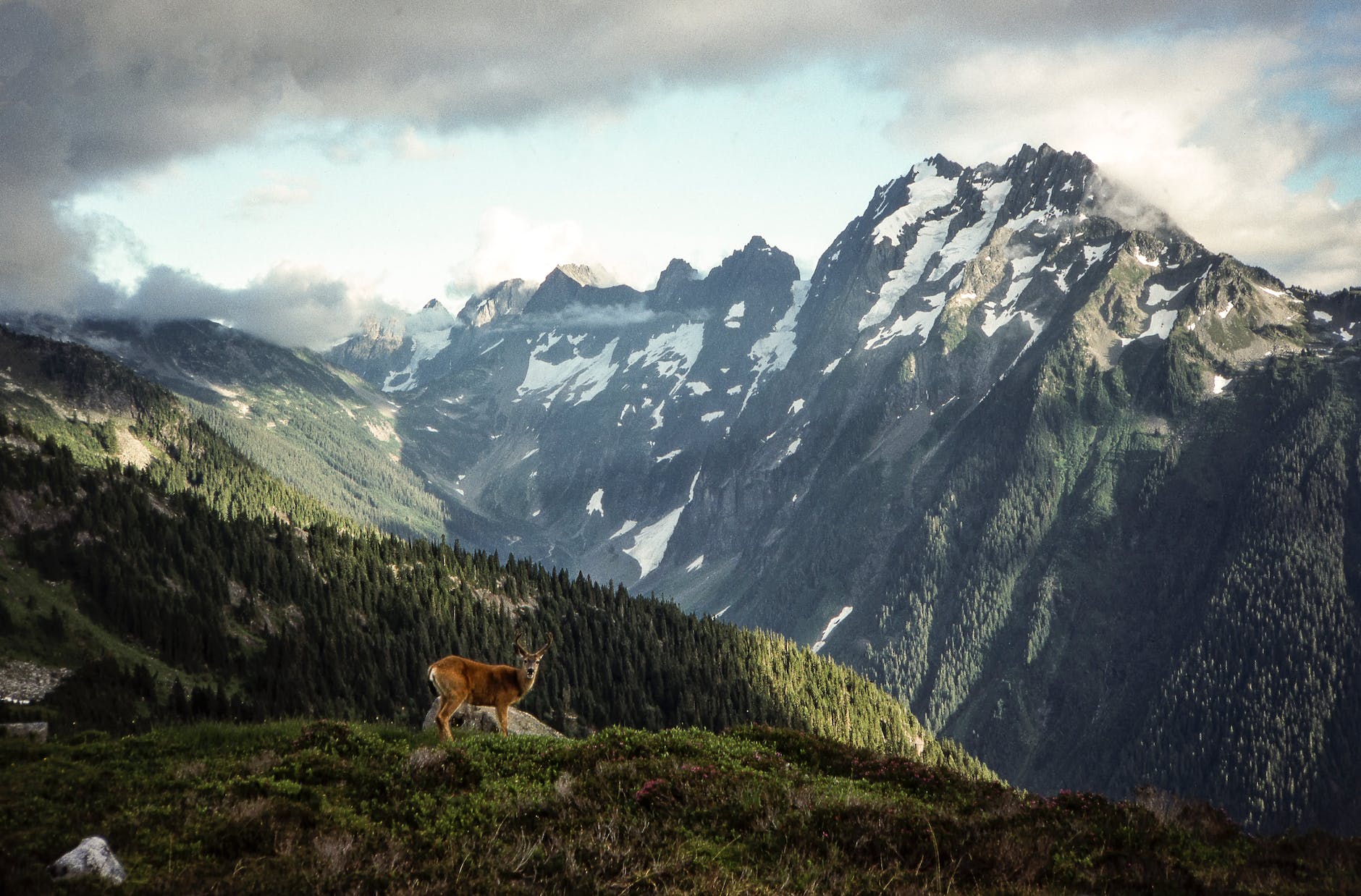
In North Washington, North Cascades National Park stands out as a premier location for stargazers. With its minimal light interference, it’s a prime spot for viewing deep-sky objects and enjoying the natural darkness that enhances the night sky’s beauty. The park has plenty of remote areas far from city lights and perfect for capturing the universe’s wonders.
South Washington
The skies above Gifford Pinchot National Forest are a canvas for the stars. Tucked away from urban brightness, this area invites you to experience the night sky in its true form. It’s an accessible retreat where the milky band of our galaxy shines brightly.
East Washington
Just beyond the intense lights of Spokane to the west of the city, you’ll discover pockets of darkness where stargazing conditions are optimal. Try Coffeepot or Twin Lakes Recreation Areas. These places offer an escape from the urban glow, allowing the night sky to reveal its beauty.
West Washington
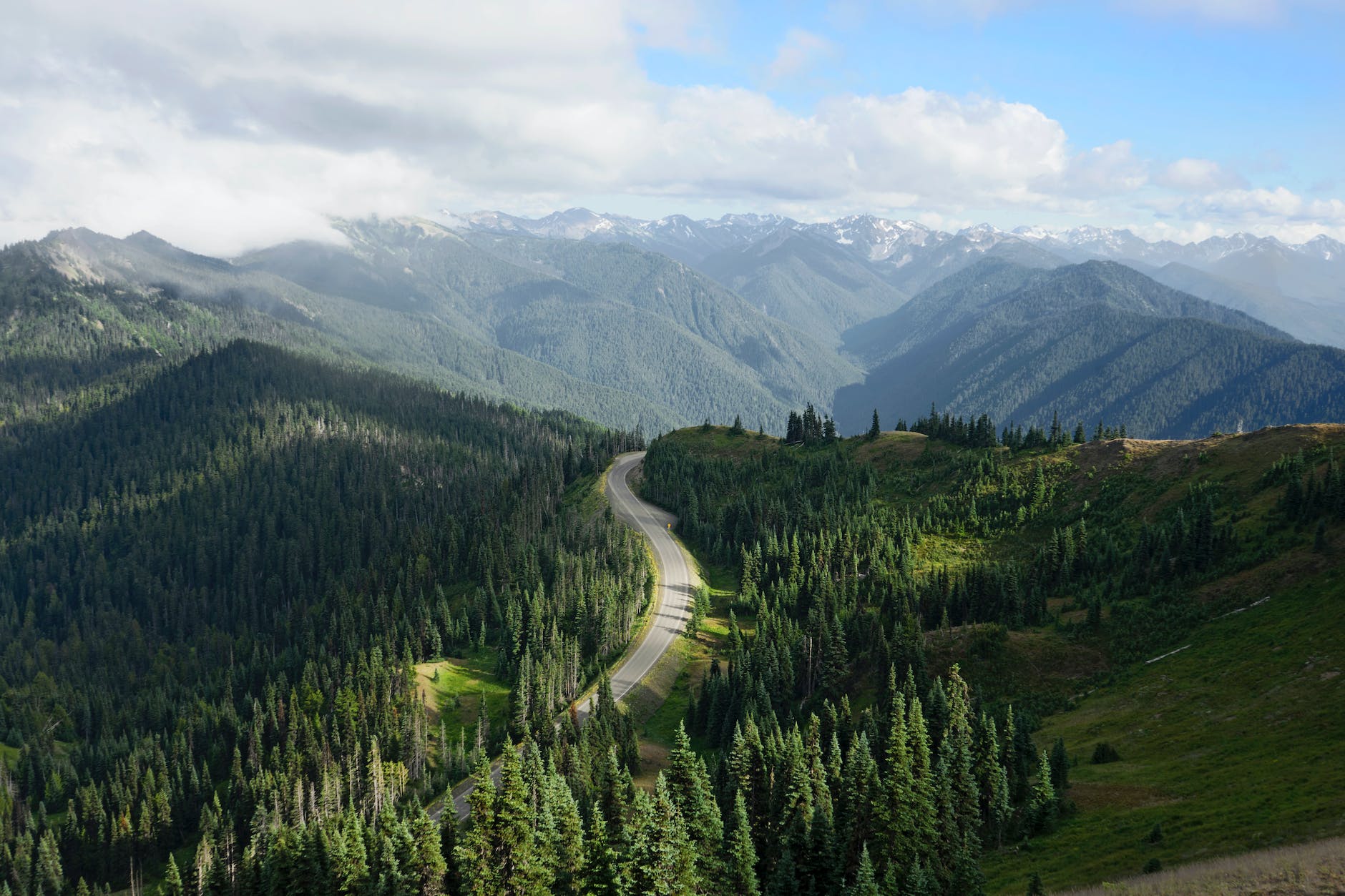
West Washington’s gem, Olympic National Park, provides some of the darkest skies in the region. The park’s rugged coastline and dense forests shield the skies from light, making it an exceptional location for astrotourists. Whether you’re peering through a lens or gazing with the naked eye, the park’s night sky is a gateway to starry wonders.
Central Washington
The central region of Washington is not to be overlooked, with the Okanogan-Wenatchee National Forest serving as a dark-sky preserve. The expansive forest offers numerous spots where the sky is dark enough to make out the faintest star clusters and satellites passing overhead. For those seeking a stellar night-time display, this area is full of dark, clear skies.
Each of these areas provides a unique stargazing experience, and we love the variety of celestial views they offer. So find your spot, and join us in marveling at the universe from these dark sky places all across Washington.
The Brightest Nights: Light Pollution Hotspots
Now we’ll show you areas to avoid in each part of the state if you are hoping to have the best stargazing trip in Washington.
North Washington
The northern region of Washington is not without its bright spots, particularly in Bellingham, where the city lights start to challenge the stars for dominance in the night sky. It serves as a reminder of the encroaching light pollution even in relatively smaller urban areas.
South Washington
In the south, the proximity of Vancouver to Portland casts a significant glow, creating a bright corridor that can slow your quest for the perfect starry night. While these urban centers offer their own kind of nighttime beauty, they’re not great for our stargazing adventures.
East Washington
Moving eastward, Spokane emerges as the main beacon of light pollution. Its metropolitan glow can ruin the fine details of the night sky that we astrotourists seek out. This makes it less ideal for observing the dimmer stars and galaxies.
West Washington
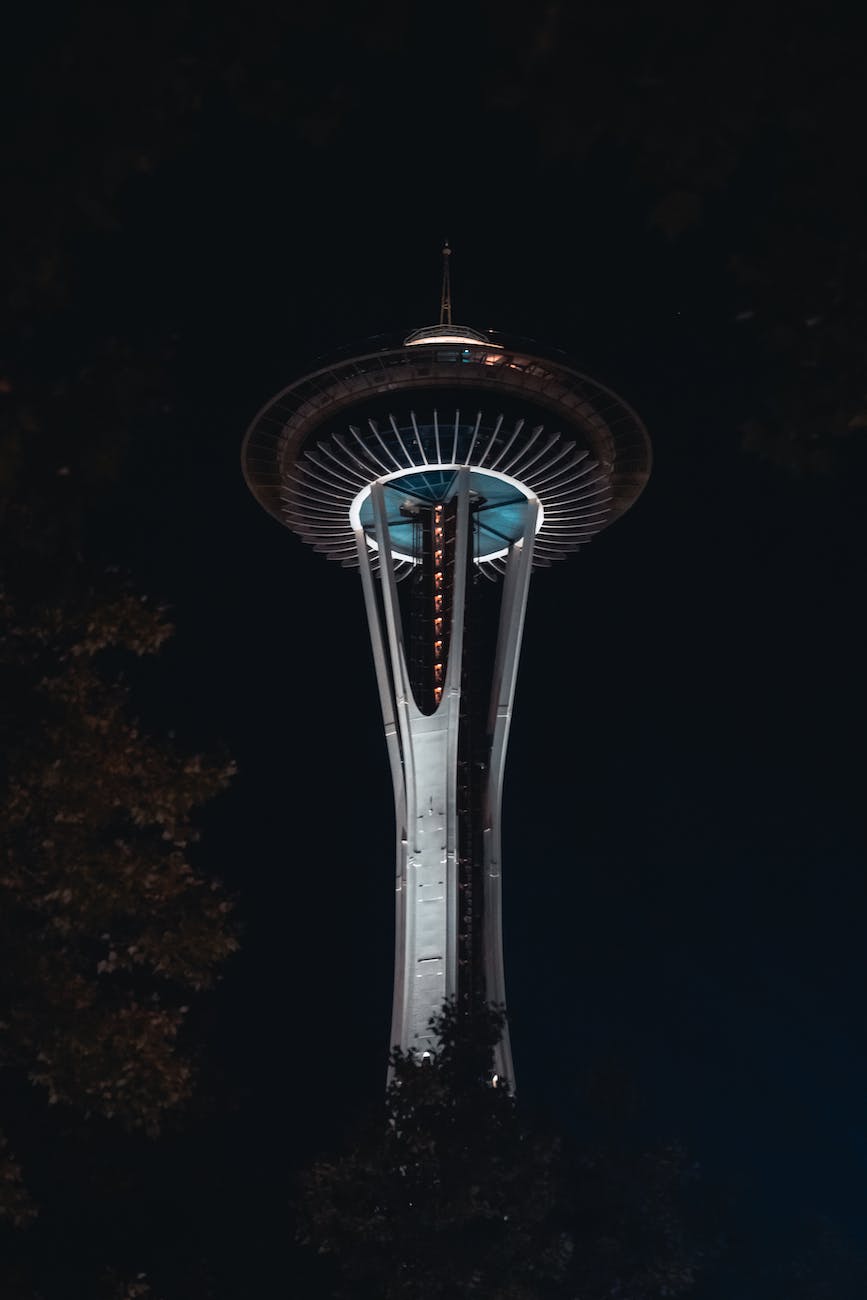
The Seattle-Tacoma area is a major source of light pollution in western Washington. The urban sprawl contributes to a bright sky that sadly washes out the finer details of the celestial sphere above.
Central Washington
Central cities like Yakima and Ellensburg also contribute to light pollution with their glow reducing the visibility of the night sky’s natural state. While these areas are bustling with their own charm during the day, they offer less for the night sky enthusiast.
In each of these areas, the competition between artificial and natural light is evident. For astrotourists like us, these spots are reminders of the importance of seeking out those darker skies to truly connect with the universe.
Geographical Influence on Stargazing in Washington
Washington State’s diverse geography, from its rugged coastlines to its vast plateaus, plays a significant role in the experience and opportunities for stargazing across the region. Each of these areas have unique characteristics and offer a different backdrop for the night sky.
The Olympic Mountains and Peninsula
The Olympic Mountains are located in the northwest and predominantly within Olympic National Park. This is largely untouched wilderness areas. The isolation from urban light pollution makes them ideal for stargazing, where the darkness is excellent and the sky reveals the full glory of the Milky Way.
The Olympic Peninsula is known as the wettest region. So, it frequently challenges stargazers with its cloud cover. On clear nights, it offers unparalleled visibility of the stars above.
The Columbia Plateau
Covering much of southern and central Washington, the Columbia Plateau is a vast area of elevated land featuring unique geological formations like coulees and scablands. Its elevation and the clear, dry air make it an exceptional location for stargazing with low light pollution and expansive horizons.
The Rocky and Columbia Mountains
The northeastern corner of Washington is touched by the Rocky Mountains and consists of the Columbia Mountains. This rugged terrain offers not only breathtaking daytime views but also dark skies for night-time observations. The high elevation and remote locations are perfect for astrophotographers and stargazers alike, offering clear views of the cosmos.
The Columbia River and Its Tributaries
Washington’s most significant river, the Columbia, and its tributaries the Okanogan and the Snake rivers, carve through the landscape. They create natural viewpoints and secluded areas away from city lights. The river valleys and basins can be excellent for stargazing, particularly in Eastern Washington where the skies are clearer.
The Puget Sound Lowlands
Between the Olympic and Cascade mountains lie the Puget Sound Lowlands which are home to major urban centers like Seattle and Tacoma. While these areas are heavily affected by light pollution, the surrounding rural areas and islands within Puget Sound can offer escape routes to darker skies. The region’s atmospheric conditions can also lead to crisp, clear nights perfect for urban astrophotography.
The Coast Range and Willapa Hills
To the south, the Coast Range extends into Oregon with the Willapa Hills offering scenic vistas that can also serve as serene stargazing spots. The natural barriers these ranges provide help to limit the spread of artificial light, creating pockets of darkness where the night sky is stunning.
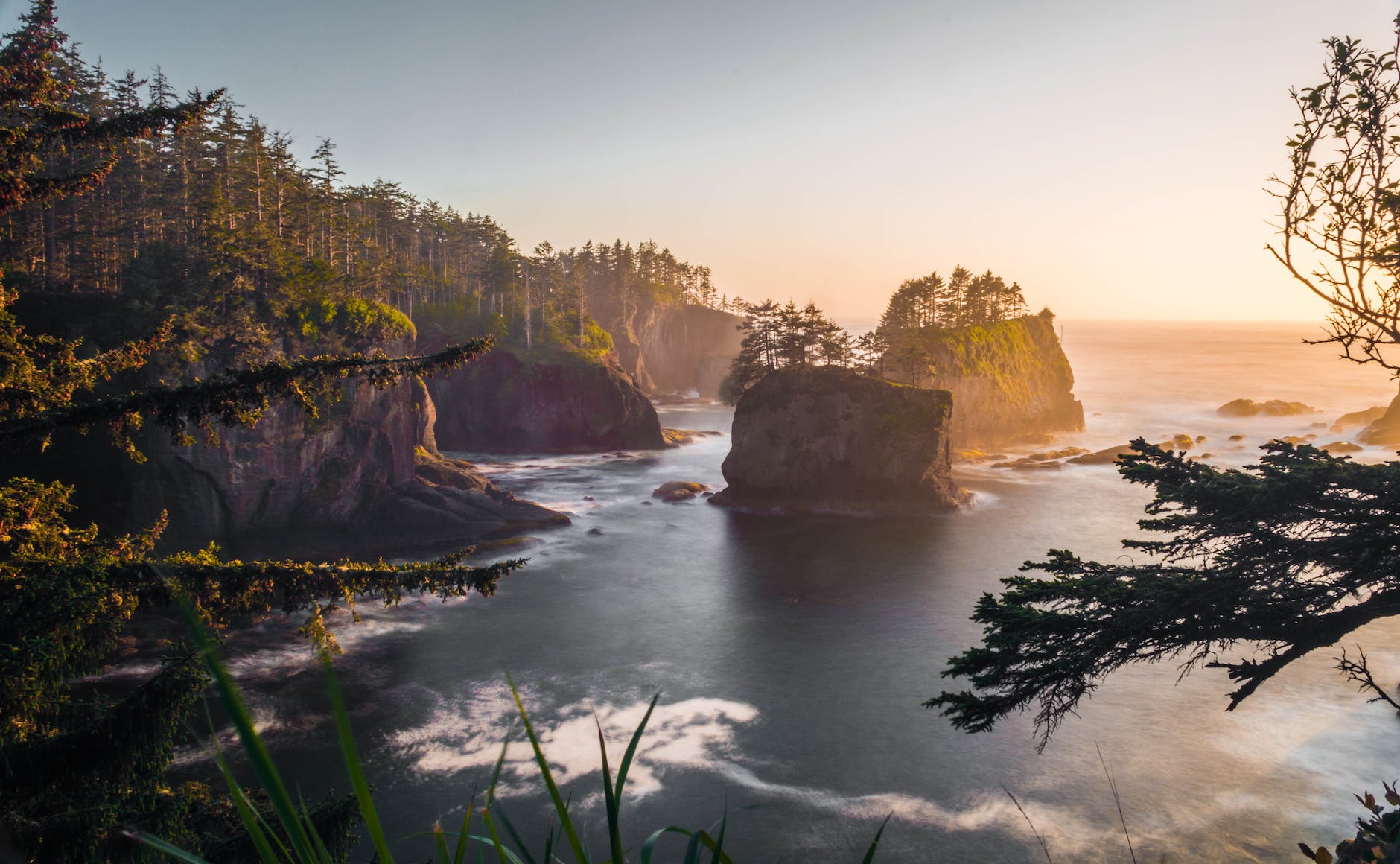
Each of these geographic features contributes to the stargazing experience in Washington State offering dark sky locations with minimal light pollution for astrotourists. The diversity of the landscape across Washington ensures that you will find a great place to stargaze anywhere in the state.
Stargazing Tips and Gear
Whether you’re nestled in the shadowed valleys of the Columbia Plateau or standing on the shores of the Puget Sound, stargazing in Washington State is an adventure that requires a bit of preparation and the right equipment. Here are a few tips we have to help you with your journey across the diverse landscapes of the Evergreen State.
Check the Weather
Clear skies are your best friend when it comes to stargazing. Keep an eye on the local weather forecast to choose the best nights for your observations.
Know the Moon Phases
The brightness of the moon can overshadow many celestial objects. Planning your stargazing around new moon phases can provide darker skies and more visible stars.
Let Your Eyes Adjust
Give your eyes time to adapt to the dark. This process can take up to 30 minutes, but it’s worth it when the stars begin to pop out before your eyes.
Use Red Light
If you need to read maps or adjust your equipment, use a flashlight with a red filter or red LED light. Red light is less likely to disrupt your night vision.
Telescope or Binoculars
While many stars and constellations can be seen with the naked eye, a telescope or a pair of binoculars will enhance your view of the moon, planets, and distant galaxies.
Star Maps or Stargazing Apps
These can help you identify constellations, planets, and other celestial events. Many apps can adjust to your location and the current night sky.
A Comfortable Chair or Blanket
Stargazing is a patient observer’s activity. Having a comfortable place to sit or lie down will make the experience more enjoyable. Make sure to bring a blanket or a comfy chair.
Warm Clothing and Supplies
Nights can get chilly, even in the summer. Dress in layers and consider bringing a thermos with a warm drink to keep cozy.
Whether you’re an amateur astronomer or an experienced astrophotographer, having the right equipment is crucial for a successful stargazing experience.
Conservation and Dark-Sky Advocacy in Washington State
Washington State has made important gains in conserving dark skies, reflecting a growing awareness of light pollution’s impact and the need for sustainable outdoor lighting. Here’s a look at some examples of conservation efforts and dark-sky advocacy across the state.
Legislative Actions to Combat Light Pollution
Washington has taken legislative action to address light pollution at the state level. A significant move was when the governor signed a transportation budget that for the first time included a provision related to light pollution. This legislation highlighted the state’s commitment to considering the impacts of light on night driving and vision.
DarkSky International’s Northwest Chapter
The Northwest Chapter of DarkSky International plays a crucial role in promoting dark-sky conservation in Washington. This organization is focused on protecting the natural nighttime environment from excessive light pollution through education, policy advocacy, and community engagement. They offer resources and information on how individuals and communities can contribute to light pollution mitigation, emphasizing the importance of responsible outdoor lighting and its relationship to climate change, ecology, human health, and vibrant communities.
Advocacy in Public Education
Educational institutions and local organizations in Washington are actively involved in raising awareness about the negative impacts of light pollution. Washington State University has faculty members who are vocal advocates for dark-sky preservation. They emphasize the disruption caused by excessive artificial lighting to both human health and wildlife. These advocates stress the importance of responsible lighting and shielding outdoor fixtures to minimize sky glow and protect the night sky for future generations.
Government Preservation
Washington State Department of Archaeology & Historic Preservation recognizes the night sky as a valuable cultural resource, underscoring the importance of preserving celestial views that have historical and cultural significance. This approach broadens the scope of dark-sky conservation, linking it not just to scientific and environmental concerns but also to cultural heritage preservation.
The combination of legislative action, community engagement, educational outreach, and cultural preservation is helping to ensure the night sky remains a source of wonder for all in Washington.
Wrapping It Up
Stargazing in Washington State is an experience like no other, offering a window to the universe above us. With the right preparation and gear, you’re all set to explore the night sky’s wonders from the darkest corners of the Columbia Plateau to the illuminated skies over the Puget Sound. Enjoy it out there.

About the Authors
We are avid stargazers Jason and Alison Takacs also known as Roadtrippin’ with Takacs. With our two boys Preston and Grayson, we seek out some of the darkest skies in the country while also going on many incredible hiking and other outdoor adventures. As part-time RVers, we try to see as much of this amazing world as possible in our spare time and hope you will join us through this blog on RWT Adventures and other forms of social media as we explore the night sky and other natural wonders as hardcore astrotourists.